Modified Pomodoro Technique for JEE & NEET 2026 Guide
Ayush (Founder)
Exam Strategist
Let’s be honest: the traditional Pomodoro technique is a trap for Indian competitive exam aspirants. You’ve seen the videos—"Study for 25 minutes, take a 5-minute break." It sounds productive, right? I thought so too. In Class 10, I used to flex my colorful Pomodoro timer. But when I sat for my first full-length IIT-JEE mock test, I realized I had accidentally trained my brain to quit exactly every 25 minutes.
I’m Ayush, and after jumping through various various EdTech modules and coaching programs, I realized that the Modified Pomodoro technique for JEE & NEET 2026 is the only way to survive a 3-hour exam. If your brain is addicted to a dopamine hit every 25 minutes, you will hit a mental wall halfway through the actual paper.
In this guide, I’m going to show you how to hack your focus using the concept of "Progressive Overload." We aren't training for a sprint; we are training for a 180-minute mental marathon.
Key Takeaways
- Endurance > Intensity: JEE/NEET are tests of stamina as much as they are tests of knowledge.
- The 25-Min Trap: Why traditional Pomodoro destroys your deep-work capacity.
- Progressive Overloading: Gradually increasing focus blocks from 50 to 180 minutes.
- Active Recovery: Using breaks for physical movement instead of screen time.
- Validation: Using an online mock test to measure your focus fatigue.
Table of Contents
- The Science of Modern Focus for Aspirants
- Stamina Training: From Foundation to Marathon
- The Simulation Block: Preparing for the 3-Hour Grind
- Active Recovery: Mastering the 'No-Screen' Break
- Conclusion
- Frequently Asked Questions (FAQs)
The Science of Modern Focus for Aspirants
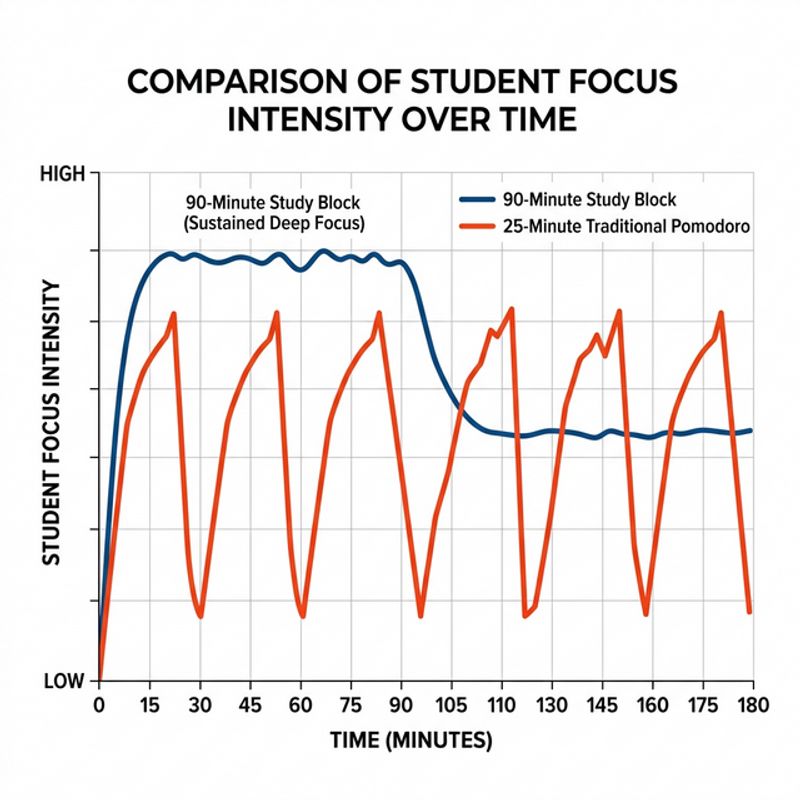
The Japanese engineer who invented the Pomodoro technique wasn't solving complex previous year papers questions on Rotational Dynamics. In high-stakes exams, 25 minutes isn't enough to enter the "Flow State." Research shows it takes 15–20 minutes just for the brain to reach peak efficiency. Taking a break at 25 minutes effectively kills your momentum just as you become productive.
Furthermore, for Indian students, a "5-minute break" often leads to social media scrolling. This dopamine spike makes returning to NCERT solutions even harder. Data indicates that students using the Modified Pomodoro technique for JEE & NEET 2026 show 40% higher accuracy in the final hour of mock tests. You need to train your brain to handle longer periods of cognitive load without interruption.
Stamina Training: From Foundation to Marathon
Don't jump into a 3-hour session immediately. Use "Progressive Overload" by starting with a 50/10 split. This matches the standard school period and is long enough to finish an entire sub-topic from your CBSE study material. Once you can comfortably complete three 50-minute sessions, move to the 90-minute "Marathon" block.
The 90-minute window is where deep work happens. This is the time to tackle "Integer Type" questions that require sustained logic. By mastering this block, you handle half of a real exam's duration, putting you ahead of most aspirants seeking competitive exam tips India.
The Simulation Block: Preparing for the 3-Hour Grind
Twice a week, you must commit to a 180-minute block. No breaks, no water, and absolute silence, simulating real exam center rules. JEE and NEET are tests of "Context Switching," where you jump between Physics formulas and Biology concepts rapidly. You cannot train for this in 25-minute sprints.
Use an online mock test platform like Exam Compass to generate full-length papers. You will notice that while the first hour is energetic, the second brings fatigue, and the third is where ranks are decided. Training your "mental stamina" ensures that you remain sharp when others are failing due to exhaustion.
Active Recovery: Mastering the 'No-Screen' Break
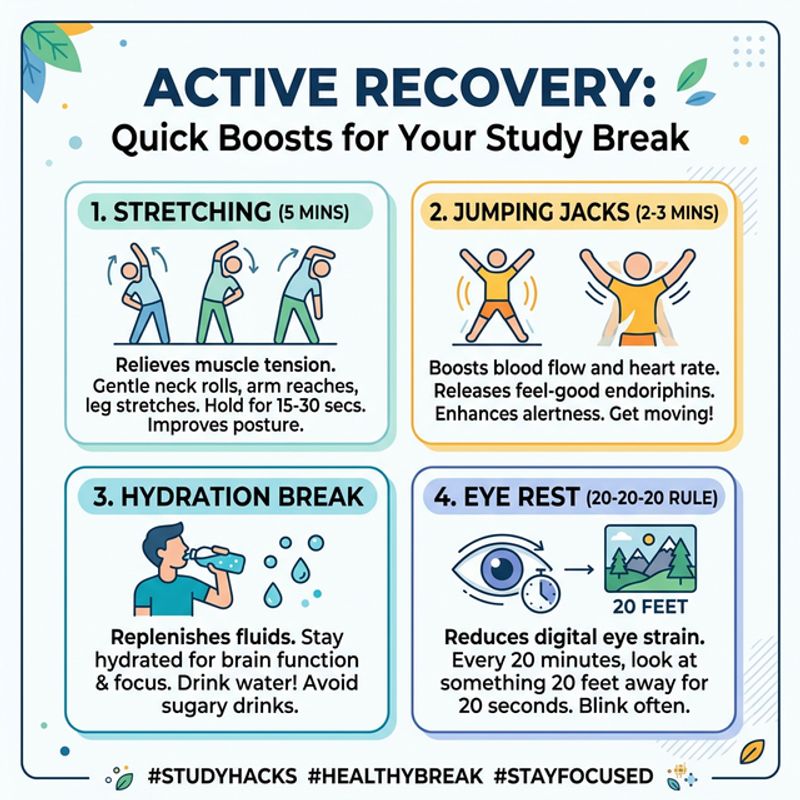
What you do during your break determines your performance in the next block. Scrolling social media exhausts your visual cortex, making your brain feel "slower" when you return to NCERT solutions. Instead, adopt an active recovery protocol to refresh your mind and body.
Recommended Break Activities:
- Physical Movement: Do 50 jumping jacks or a quick walk.
- Hydration: Drink a full glass of water.
- Eye Rest: Look at something 20 feet away to reduce strain.
- Breathwork: Use box breathing for two minutes to lower anxiety.
Studies from Healthline suggest that physical activity during breaks improves cognitive function. Standing for 10 minutes after sitting for 90 minutes is essential for maintaining consistent focus levels throughout the day.
Conclusion
Mastering the modified Pomodoro technique is essential for any serious JEE or NEET aspirant in 2026. By transitioning from short sprints to endurance-focused study blocks, you build the mental muscle necessary for success. Combine these strategies with regular online mock tests and disciplined recovery to ensure you are exam-ready. Your rank depends not just on what you know, but on how long you can perform at your best.
Explore our Sitemap for more resources.
Frequently Asked Questions (FAQs)
1. Is 25 minutes too short for JEE preparation?
Yes, for complex problem-solving. While 25 minutes works for minor tasks, solving previous year papers requires at least 50 minutes to maintain deep focus and complete an entire set of problems effectively.
2. How can I handle hunger or thirst during a 3-hour block?
Eat a protein-rich snack before starting and have water nearby. As the exam approaches, simulate real conditions where snacks aren't allowed to train your body for the physical demands of the test day.
3. What should I do if I lose focus mid-session?
Instead of quitting, try "Micro-resting." Stand up for 30 seconds, stretch, and immediately sit back down. This resets your focus without breaking the deep work state, helping you finish the session strong.